|
Heat
a metal body and describe the colour changes is a familiar question
in school science laboratories. As the temperature increases the
colour of the metal changes from dull red to bright red to orange
and as more heat is applied to yellow to white through to blue -
white.
At low temperatures the metal glows red and has a 'warm' subjective
appearance that corresponds to longer wavelengths in the emission
spectrum, at much higher temperatures the metal glows
blue - white and has a 'cold' subjective appearance that corresponds to shorter
wavelengths in the emission spectrum.
The
notion of a
blackbody, an ideal (theoretical) thermal
source that exchanges energy (absorbs and emits radiation) over a
continuous distribution of wavelengths
is used to describe scientifically the colour appearance
of a light source.
In thermal equilibrium, the shape of the broadband spectrum (the
dependence of emissive power with wavelength) is determined by
temperature alone. Using the concept of quantised electromagnetic
oscillations that provided the foundation of quantum theory,
this is the celebrated
Planck radiation law.
Indeed, all bodies
radiate energy
at temperatures above absolute zero
(−273.15 °C), where
molecular motion ceases (quantum mechanical 'zero point motion'
remains).
Our laboratory experiment has demonstrated a meaningful fact, as the
temperature increases the colour changes, the peak emission is
displaced
toward shorter wavelengths (the blue end of the visible spectrum and
beyond). This
behaviour is described mathematically by the
Wien
displacement law,
that relates the wavelength λmax at maximum power to the absolute temperature
T.
The units of wavelength and absolute temperature given here are micrometre (μm)
and kelvin (K).
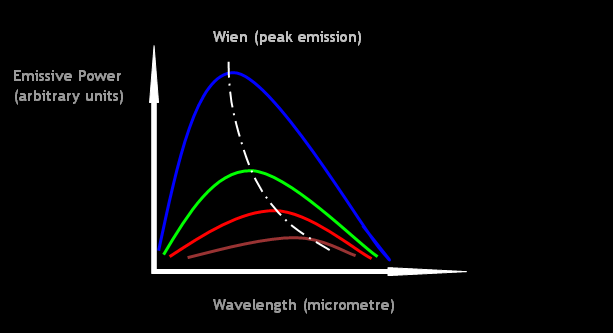
Emission spectra (the curves are (skewed) bell - shaped) for an
ideal thermal source at different
temperatures and
the Wien displacement law are illustrated, (notice the inverse
relationship between wavelength and temperature).
Blackbody
Radiation Spectra
|
|
Blue |
10000 K, λmax about 0.29 μm |
|
Green |
5000
K, λmax about 0.58 μm |
|
Red |
1000
K, λmax about 2.90 μm |
|
Maroon |
100
K, λmax about 29.0 μm |
At the higher temperature 10000 K, the radiant power maximum occurs
in the ultraviolet band at a wavelength of about 0.29 μm, at the lower temperature 100
K, the radiant power maximum occurs in the infrared band at a wavelength of about 29.0 μm.
For terrestrial objects at a nominal room temperature of 300 K (27
°C),
the radiant power maximum occurs at a wavelength of about 9.7 μm.
The sun can be considered an almost ideal thermal source
(blackbody) at 5800 K,
the temperature of the photosphere, the visible 'surface'. This is an average temperature, the local
temperature fluctuates. In one second, thermonuclear fusion in the
core
transforms several million tons of matter into electromagnetic
radiation. Approximately 40% of the solar power is distributed in the visible spectrum
(the human visual system is
sensitive to stimuli within the
wavelength range
0.4 - 0.7 μm), that extends from violet
through blue, green, yellow and orange to red, part of the
electromagnetic spectrum between the ultraviolet and infrared bands.
For the photographer, assessing the spectral quality of light used
to create an image is a crucial element to ensure the correct colour
balance.
Think of colour temperature as a single - value
characterisation of spectral quality.
Colour Temperature and Correlated Colour Temperature are measured in kelvin,
the
unit of absolute (thermodynamic) temperature (after Lord Kelvin,
1824
- 1907),
where Kelvin temperature (K) =
Celsius temperature (°C) + 273.15.
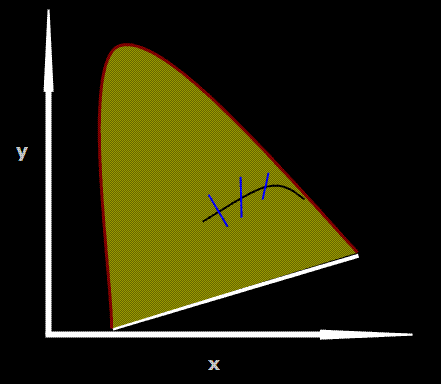
In terms of the attributes, hue (dominant wavelength) and saturation
(variance), colour, as evidenced by the human visual system can be
described using x-y chromaticity coordinates on the CIE chromaticity
diagram. Shown in black is the Planckian locus, the contour formed by
the set of chromaticity coordinates that maps the colour of a
blackbody as the temperature changes.
Chromaticity coordinates are derived
by weighting the spectral power
distribution, using the CIE Standard Observer
colour matching functions.
| CIE 1931 Chromaticity
Diagram (schematic) |
Note that, dependent on the generation process, light can be
categorised as
thermal or non - thermal.
Thermal
For artificial and natural light sources, tungsten, sun, ..., that
approximate an ideal
thermal source, the spectral power distribution provides an
unambiguous description of colour temperature (more intuitive than
CIE colour space).
The
spectral power distribution, the radiant (emissive) power at each
wavelength, objectively characterises a light source.
The Colour Temperature of a light source is the Kelvin
temperature of
a blackbody that has the same (or similar) spectral power
distribution throughout the visible spectrum and
therefore emits light of the same
(or similar) colour appearance.
On the CIE chromaticity diagram,
Colour Temperature
(kelvin)
is determined by comparing the chromaticity coordinates of a light
source with the chromaticity coordinates of a blackbody
(chromaticity coordinates match on the Planckian locus).
Non - thermal
For artificial and natural
light sources, fluorescent, aurora, ...,
that do not approximate an ideal thermal source,
the spectral
power is not distributed as
a broadband but as a
narrowband or as discrete lines, each light source is different.
To characterise spectrally selective light sources, correlated colour temperature is the
most practicable spectral quality metric,
based solely on the perceived colour.
Given that light sources with disparate
spectral power distributions can produce the same perceived colour
(have the same chromaticity coordinates) at the same luminance and
under the same viewing conditions.
On the CIE chromaticity diagram,
Correlated
Colour Temperature
(kelvin)
is determined by comparing the chromaticity coordinates of a light
source with the chromaticity coordinates of a blackbody
(chromaticity coordinates that represent the closest (metameric) match to the Planckian
locus). Shown in blue, (crossing the Planckian locus) are lines of
constant correlated colour temperature.
For an ideal (theoretical) thermal source, colour temperature
and correlated colour temperature are the same.
To
summarise, 'warm' tones are associated with light that is rich in
red and has a low colour temperature, 'cool' tones are associated
with light that is rich in blue and has a high colour temperature.
In film and digital photography, reflected (or transmitted) light is
used to image
a scene. The natural colour of terrestrial objects is due to variations in the spectral reflectance (light
that is not reflected is absorbed or transmitted,
the chlorophyll in
a leaf reflects green light but absorbs red light and blue light) of
surface features
that are neither ideal diffuse reflectors or ideal specular
reflectors, proportions vary. There are many light scattering mechanisms that
contribute to our observation and understanding of the world around us. The natural
colour of very few
terrestrial objects is due to emitted
light.
Though combinations of the additive primary colours
Red,
Green and
Blue can reproduce any colour, the perceived colour (hue)
of surface features is dependent on
the photopic (light - adapted) response
of the human visual system and the viewing conditions. A film or
digital camera (and photographer's eye) record the product of
spectral power (of the light source)
and
spectral reflectance (of surface features) at each
spatial position. A characteristic of the human visual system is
chromatic adaptation. The mechanism compensates for the spectral
differences between light sources and thus provides an almost colour constant descriptor.
Hence,
colour perception (that involves neural processes) is generally independent
of the spectral power distribution of the light source (the
colour appearance of the leaf
is 'more or less' the same at sunrise, noon and sunset).
Achieving accurate colour reproduction under artificial and natural
light that
exhibit disparate spectral power distributions remains one of the most
challenging problems, fundamental to photography.
|
LIGHTING for INDOOR and OUTDOOR PHOTOGRAPHY |
ARTIFICIAL
LIGHT SOURCES
The principal sources of illumination are discharge
lamps and incandescent lamps.
A discharge lamp can operate at
various pressures to produce a line spectrum or a line
spectrum that is
superimposed on a (continuous) broadband spectrum. Familiar examples are the
fluorescent 'daylight' and 'warm - white' lamps, metal - halide
lamps and xenon lamps. The 'daylight lamp' has a
range of colour temperatures from
3000 - 6500 K,
the 'warm - white' lamp has
a
colour temperature of about 3000 K.
Dependent on the fluorescent coating - vapour combination, the lamp
can be tuned to
different emission spectra, of
late,
colour balanced fluorescent lamps that produce uniform
lighting have become the standard. Mercury vapour lamps that emit
blue - green coloured light and sodium vapour
lamps (the familiar low pressure sodium lamps used for street
lighting) that emit yellow - orange coloured light have discrete
line spectra. Vapour lamps that are operated at high pressures and
temperatures provide superior colour rendition due to (collisional)
broadening of the
spectral lines. Typically, binary or
ternary amalgams are introduced.
An electronic flash unit operates by means of an
electrical discharge through a rare gas (xenon), the
line spectrum that is superimposed on a (continuous)
broadband spectrum has
a colour temperature of between 5500 and 6500 K,
and
resembles natural
daylight.
An incandescent lamp has a
(continuous)
broadband spectrum, the spectral power
distribution is similar to an ideal
thermal source. Common types are the
tungsten - filament lamp
(domestic lighting), the
tungsten - halogen lamp and the photoflood and
photographic lamps. The 100W tungsten - filament lamp has a colour temperature of
about 2865 K, the tungsten - halogen lamp has a range of colour
temperatures from 2700 - 3400 K and the photoflood and photographic
lamps have colour temperatures of about 3400 K and 3200 K. The age
and working voltage of a lamp
and reflector type (mirrored, ...) may effect the spectral
quality of the light and the range of colour temperatures that are available.
Less familiar is solid state lighting that is based on innovative light emitting
diode
(LED)
technology. Lamps produce a
broadband (white
LEDs are
colour temperature tunable) or a narrowband emission
spectrum.
Most artificial light sources can produce visually displeasing colour casts,
fluorescent a greenish tinge, incandescent a
yellowish - orange tinge and an electronic flashtube a bluish tinge.
NATURAL LIGHT SOURCES
The principal source
of illumination is daylight (direct sunlight and diffuse
light from the clouds and sky). However, the selective absorption and scattering of sunlight by
atmospheric constituents (aerosols, gases and pollutants) modifies
the solar spectrum. The colour temperature of daylight changes
throughout the day (and year) due to the angular position of the sun and from
day to day due to the prevailing atmospheric conditions. The colour temperature of average quality sunlight (at noon) is
about 5400 K and of photographic daylight is about 5500
K.
The blue colour of skylight is due to selective (Rayleigh)
scattering that is inversely proportional to the fourth power of
the
wavelength, atmospheric gas molecules and particulates scatter blue
light (shorter wavelengths) about 4 times more intensely
than red light (longer wavelengths). The colour temperature of
skylight can range from 12000 - 20000 K. At lower sun angles the
direct sunlight has to traverse more of the earth's atmosphere and
is depleted of blue light so that colours are biased toward red.
Near to sunrise and sunset, the colour temperature of sunlight can
range from 2000 - 3000 K. Particulates suspended in the atmosphere
(dust, smoke, ...) scatter light selectively to create spectral
changes that can colour the sky many shades of red and orange.
Clouds filter both sunlight and skylight, the white colour of clouds (and fog) is due to nonselective
(Mie) scattering,
the larger water droplets
and ice crystals scatter all wavelengths
evenly. However, the appearance of clouds
can vary from white to
black, due to multiple scattering and shadowing.
The duration of twilight is dependent on latitude (at the equator
the twilight period
is brief) and the time of year. Once the sun is
below the horizon,
the evening sky changes from yellow - orange to dark saturated blue,
the morning sky changes are reversed. After sunset, the afterglow
(due to light scattering by stratospheric particulates) and the diffused light from
middle and high level cloud reflections are the source of an extended range of colour temperatures, at (deep)
twilight the
colour
temperature may exceed 15000 K.
Most natural light sources can produce visually displeasing colour casts, the
lower colour temperature at sunrise and sunset a reddish
- orange
tinge, the higher colour temperature on an overcast day a
bluish tinge.
The
principal source of illumination at night is moonlight (sunlight
reflected from
the moon's surface), the illuminance at sea level is governed by the
elevation above the horizon, the phase of the moon, the earth - moon distance
throughout the lunar cycle and the diffuse reflectance properties of
the moon. The average visual albedo
(the measure of reflectance) is 0.12. Due to the wavelength dependence
of the reflectance, the spectral power distribution is shifted
to longer wavelengths (moonlight is slightly redder (warmer) than direct
sunlight). Moonlight has a colour temperature of about 4100 K.
The ratio of
scene illuminance under daylight and
full moonlight
conditions is about 150000:1.
On a clear, moonless night, airglow (photochemical luminescence) and
direct and scattered starlight are the principal sources of
illumination. Though obtrusive
artificial light is a modern world problem, far removed
from populated areas,
the night sky
is not pitch black.
Generally,
subjects at sea
level receive direct sunlight, skylight (scattered sunlight), cloud
scattered light and
ground reflected light. In regions of shade the colour balance
changes. Generally, subjects at sea level receive skylight,
cloud
scattered light
and ground reflected light. Remember, the
colour temperature of natural light is influenced by many
environmental factors
and varies throughout the day.
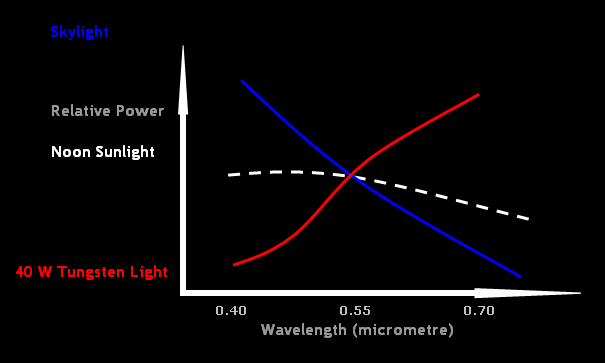
The relative proportions of different colours (violet (0.40 μm) to red (0.70 μm))
that contribute to skylight, noon sunlight and 40W tungsten
filament (domestic) light are illustrated.
Relative
Spectral Power for Principal Light Sources
|
Near to urban centres the juxtaposition of
artificial and natural light sources gives rise to a
kaleidoscope of colours and intensities. As darkness
falls,
the blend of artificial and natural light can create
a backcloth studded with vivid contrasts
(see London Skyline). To
accurately record scenes that are illuminated by light
from diverse sources (artificial - natural) with widely
different colour temperatures can be
particularly challenging.
Colour temperature meters
based on the Kelvin temperature scale use two (red and
blue) or three (red, green and blue) filters to
characterise the spectral quality of light sources.
Compared to spectrocolorimetric or
spectroradiometric measurements under controlled
conditions, the accuracy of handheld colour temperature
meters is limited (especially for
non - thermal sources).
COLOUR TEMPERATURE (K) for ARTIFICIAL and NATURAL LIGHT SOURCES
(Approximate)
|
|
LIGHT SOURCE |
COLOUR
TEMPERATURE |
|
Blue
Sky (Skylight) |
12000 - 20000 |
|
Heavily
Overcast Sky |
10000 |
|
LCD Monitor |
9300,6500,5000 |
|
Open
Shade (Clear Day) |
9000 |
|
Average
Summer Shade |
8000 |
|
Hazy
Sky |
8000 |
|
Daylight
Shade (Blue Sky) |
7500 |
|
Daylight
(Sunlight & Skylight) |
6500 |
|
European Television Standard |
6500 |
|
Daylight
Fluorescent |
3000 - 6500 |
|
Overcast
Sky |
6000 |
|
Electronic
Flash |
5500 - 6500 |
|
Photographic
Daylight |
5500 |
|
(Mean Noon) Sunlight
|
5400 |
|
Daylight
Photoflood |
4800 - 5000 |
|
Moonlight |
4100 |
|
Photoflood |
3400 |
|
Professional
Tungsten |
3200 |
|
100 W
Tungsten |
2865 |
|
Tungsten Halogen |
2700
- 3400 |
|
Sunrise/Sunset |
2000 - 3000 |
|
40 W
Tungsten |
2650 |
|
Candle Flame |
1850 - 1930 |
| Low Pressure
Sodium |
1800 |
| Match Flame |
1700 |
|
Glowing
Coals |
1400 |
The
human visual system is remarkably adaptable, the perceived colour of
objects is for the most part (the human visual system
demonstrates some degree of colour constancy: stable colour
appearance) independent of the source of
illumination.
The LMS cone cells of the eye are responsive to the
Red,
Green
and
Blue
components (cone spectral responses overlap) of the reflected light
from a scene.
Colour constancy ensures that colours
appear natural and that
white
objects appear white
(or neutral) to our eyes.
Human visual processing employs both chromatic adaptation (and
contextual cues) to aid
object recognition and classification. However, the chemical and electronic
recording
media at the heart of film and digital cameras are not so evolved
or
sophisticated, for accurate colour reproduction (colour balance) the spectral quality of the source of illumination
must be characterised.
Under changing illumination,
Film Cameras
use colour balanced film and optical filtration to manage colour
rendition. So that colours appear natural both indoors and outdoors,
tungsten balanced (A/B for light sources of 3400/3200 K) and
daylight balanced (5500 K) films have colour sensitivities that are
matched to the particular conditions. Needless to say, film can be
employed creatively, use a tungsten balanced film to record a (noon)
outdoor scene produces a bluish cast, use a daylight balanced film
to record an indoor scene (under incandescent light) produces a
yellowish - orange cast. Optical filters that effectively 'shape'
the spectral power distribution of a light source are also used,
amber filters decrease the colour temperature, blue filters increase
the colour temperature. Light balancing and colour conversion
filters (used with film that has an incorrect colour balance, for
example, tungsten film used for outdoor photography and with mixed
lighting) change the colour temperature of a light source by small
and large amounts. The disadvantages of optical filters are: the
degree of
attenuation, flare and vignetting and for SLR cameras, colouration of the viewfinder image.
The colour temperature can also be changed using colour correction
gels in front of a light source. A full CTB gel converts tungsten light
to daylight, a full CTO gel converts daylight to tungsten light.
Under changing illumination,
Digital Cameras
use white balance (WB) technology to manage colour rendition. To
compensate for various lighting conditions a fast algorithm
estimates the colour temperature of the light source and adjusts the
RGB pixel responses
to emulate the colour perception of the human visual system,
optical filtration is unnecessary. On the CIE chromaticity
diagram, the above process repositions the white point on
the Planckian locus. For spectrally selective sources that do not
closely approximate a blackbody thermal source, the white point is
displaced from the Planckian locus. By setting the green - magenta
correction any residual colour cast is removed (bear in mind, the
human visual system is most sensitive to yellow - green light). Using the
RAW file format, the colour temperature and green -
magenta correction can be changed during post processing.
Of course,
filters (neutral density, polariser, ...) are useful for special
effects and to enhance the contrast - saturation of an image.
So
that colours appear natural both indoors and outdoors, the automatic white
balance (AWB) introduces a blue shift to compensate
for a red colour cast and introduces a red shift to compensate for a
blue colour cast.
AWB algorithms are classified as Global (grey - world assumption) or
Local (white - world assumption), based on analyses of all or selected
pixels. In most cases the AWB reproduces
colours convincingly, however, for
consistency and quality,
select the white balance
preset that
most closely matches the lighting conditions and for further
refinement
use white balance bracketing. Experiment with the white balance presets,
Cloudy,
Shade,
Direct Sunlight, Fluorescent,
Incandescent
and
Flash
(names vary)
and observe the colour changes.
Fluorescent lighting can be particularly
variable,
some high -
end cameras offer alternative fluorescent settings to provide flexibility.
The effect of the Cloudy and Fluorescent
settings is demonstrated below.
Notice the global colour shift. The
white balance presets are selected using a button
and dial, or
multi - selector, typically an icon is displayed on the LCD
panel.
For exact
colour rendition,
use a diffuse white
(18% grey card (the card must fill the frame)) or neutral reference
that reflects red, green and blue uniformly under all lighting
conditions, and perform a manual white balance.
Exercise your creative flair, the camera white balance controls can
be used to intensify colours and accentuate a mood. To give emphasis
to a cold scene, set the WB to correct for a low colour temperature
or select the incandescent preset, the camera response is to add
blue. To give emphasis to a warm scene, set the WB to correct for a
high colour temperature or select the cloudy/shade preset, the
camera response is to add red. Alternatively, perform a manual white
balance using a coloured reference (to add cool tones use a red
card, to add warm tones use a blue card). The balance of recorded
colours is a critical element of your image, 'cool' and 'warm' tones
convey a visual message that can subdue or stimulate our emotions.
Be aware of constantly changing lighting, mixed lighting (combined
indoor and outdoor lighting) and scenes with predominantly one
colour. For optimal colour reproduction, the AWB averages the
sampled regions of the scene to remove colour imbalances, however,
differences are sometimes over - corrected and introduce localised
colour casts.
Some cameras feature 'intelligent' AWB that uses scene data and
recognition technology. In demanding situations, use the manual white balance
setting to achieve greater colour accuracy. At all times, use your
knowledge of
colour temperature to obtain the most realistic rendition of
artificially and naturally illuminated scenes.
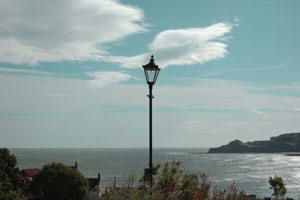
White balance Cloudy White balance Fluorescent
Many
parameters can be changed post capture using
proprietary or
third - party image - editing software. For
images saved to a RAW file format (shooting parameters (contrast, saturation,
sharpening, white
balance, ...) are unprocessed), unlimited colour correction
(and creation)
is feasible,
for images saved to a JPEG file format (shooting
parameters (contrast, saturation, sharpening, white balance, ...) are processed), limited colour
correction (and creation) is feasible.
As a rule, try to achieve the desired effect in - camera (this is more rewarding and can
save you
time - consuming post processing).
Of
course, film users can convert images to a digital format for
further manipulation.
One
final
point, though
(Correlated) Colour
Temperature
is used
to
describe scientifically
the
subjective colour or visual appearance of a light source, there are
inherent weaknesses. A high colour temperature is perceived
as 'cold' and a low colour temperature is perceived as 'warm'. This association is
contrary to our instinct, further, the relationship between colour
temperature and colour is non linear, our visual perception (colour
discrimination) of
similar differences
in
colour temperature is not identical, the colour change at low colour
temperatures is greater than
the
colour change at high colour temperatures, for example,
the colour change between 2000 - 2500 K is greater than
the
colour change between
5000 - 5500 K.
The
mired
scale (an
acronym for MIcro REciprocal Degree) is
a measure
that
avoids the negative aspects of the Kelvin scale. The mired scale is
linear, equal increments on the scale correspond (practically) to
equal visual increments.
For a colour temperature T (K), the mired value is given by
Colour film is manufactured to be daylight balanced for 5500 K (MV
182), type A tungsten balanced for 3400 K (MV 294) or
type B tungsten balanced for 3200 K, (MV 312).
Blue
filters
(Wratten #80A, ...) increase the colour temperature,
a decrease in mired value.
Amber
filters
(Wratten #85, ...) decrease the colour temperature, an increase in
mired value. Furthermore, the mired shift value (MSV)
of combined filters is additive, to shoot type B tungsten film in
daylight, stacking 81A (MSV +18) and 85 (MSV +112) filters gives a
mired shift value of +130.
Decrease the colour temperature from 5500 to 3200 K with a mired
shift of +130,
increase the colour temperature from 3200 to 5500 K with a mired
shift of −130.
For
digital cameras that offer fine tuning, the white balance
presets can be
adjusted, typically at 10 mired intervals.
| All
images and text © imajtrek
|
|